Sarvoknit Insights
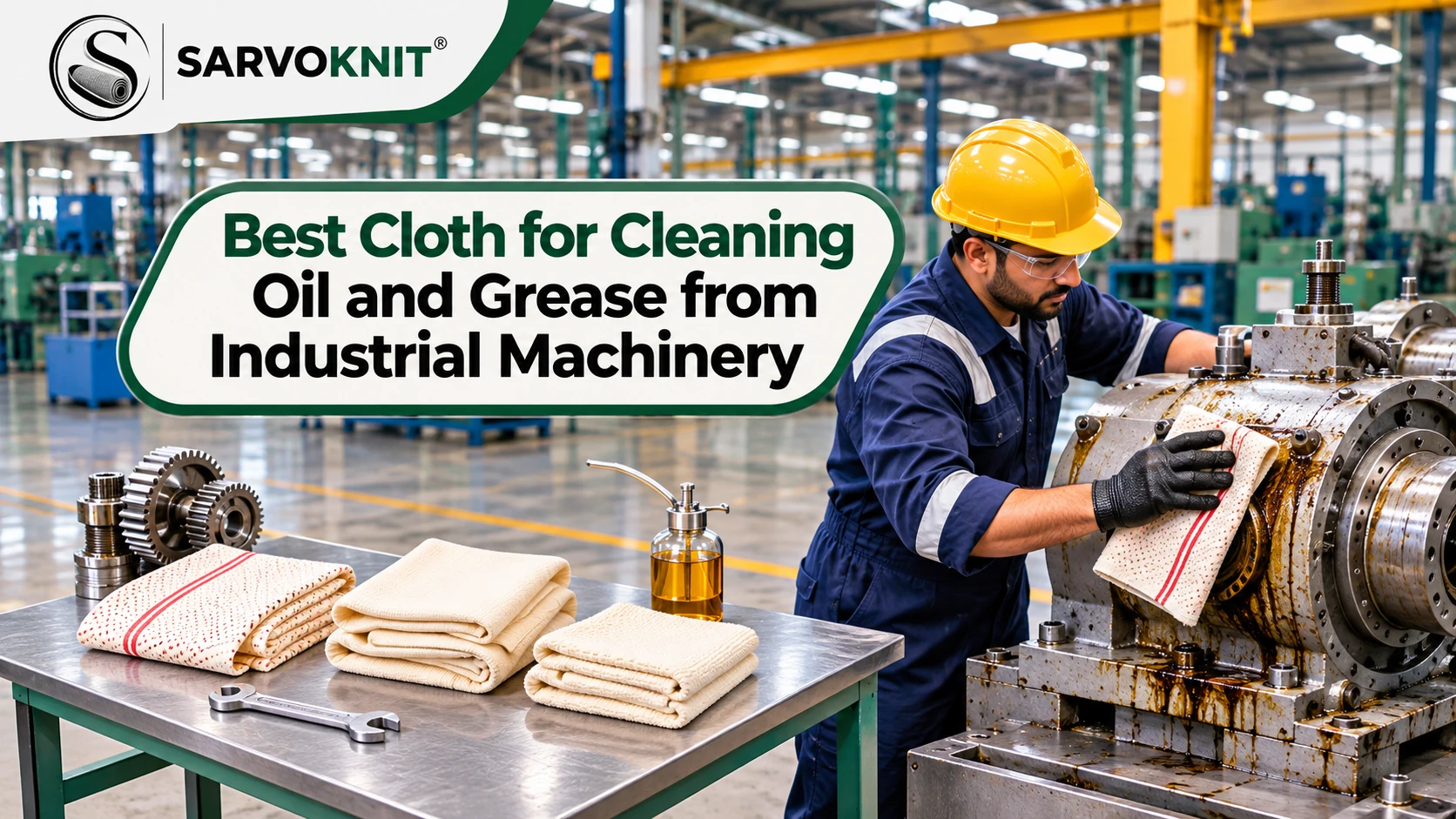
Best Cloth for Cleaning Oil and Grease from Industrial Machinery
Discover the best cloth for cleaning oil and grease from industrial machinery. Learn how cotton mutton cloth and other industrial wiping materials help remove oily residue, support machinery maintenance, and improve cleaning efficiency.
On this page
- 01 Why Is Choosing the Right Cloth Important for Cleaning Industrial Machinery?
- 02 Which Types of Cloth Are Best for Removing Oil and Grease?
- 03 Is Cotton Mutton Cloth Good for Cleaning Oil and Grease from Machinery?
- 04 How Can You Safely Remove Oil and Grease from Industrial Machinery?
- 05 What Should Industrial Buyers Look for in an Oil Cleaning Cloth?
- 06 Which Industries Use Cotton Cloth for Cleaning Oily Machinery?
- 07 Why Should Businesses Consider Sarvoknit for Industrial Cotton Wiping Cloth?
- 08 Which Cleaning Cloth Should You Choose for Your Industrial Machinery?
The best cloth for cleaning oil and grease from industrial machinery depends on the amount of residue, surface type, and cleaning requirements. Absorbent cotton wiping cloths, including knitted mutton cloth, are practical options for routine machinery cleaning, oil residue removal, and workshop maintenance. Heavy spills may require dedicated industrial absorbents, while sensitive equipment may need specialised low-lint wipes.
Oil and grease are common in factories, engineering workshops, automotive service centres, and manufacturing facilities. Lubricants help machines operate efficiently, but excess residue on accessible surfaces can attract dirt, contaminate work areas, and complicate maintenance.
Choosing the right industrial cleaning cloth helps workers remove residue efficiently without unnecessarily damaging equipment or leaving unwanted fibres behind.
This guide explains which cloth materials work for oily machinery, how to clean different types of residue, and what industrial buyers should consider when selecting wiping fabrics.
Why Is Choosing the Right Cloth Important for Cleaning Industrial Machinery?
The right machinery cleaning cloth should absorb or lift oily residue, withstand routine wiping, and suit the surface being cleaned.
Industrial equipment frequently accumulates lubricating oil, grease, coolant, dust, and other manufacturing residues. These contaminants do not always respond to the same cleaning method.
For example, a light film of machine oil can often be removed with an absorbent cotton cloth. Thick grease may require an approved degreasing product before the residue can be wiped away.
Using unsuitable fabric may create additional problems, including:
-
Spreading oil across the surface instead of removing it.
-
Leaving lint or loose fibres on machinery components.
-
Scratching sensitive finishes with contaminated or abrasive material.
-
Increasing cloth consumption during repetitive cleaning.
-
Introducing unwanted residues into maintenance operations.
A suitable wiping material can improve cleaning consistency while reducing unnecessary rework.
Which Types of Cloth Are Best for Removing Oil and Grease?
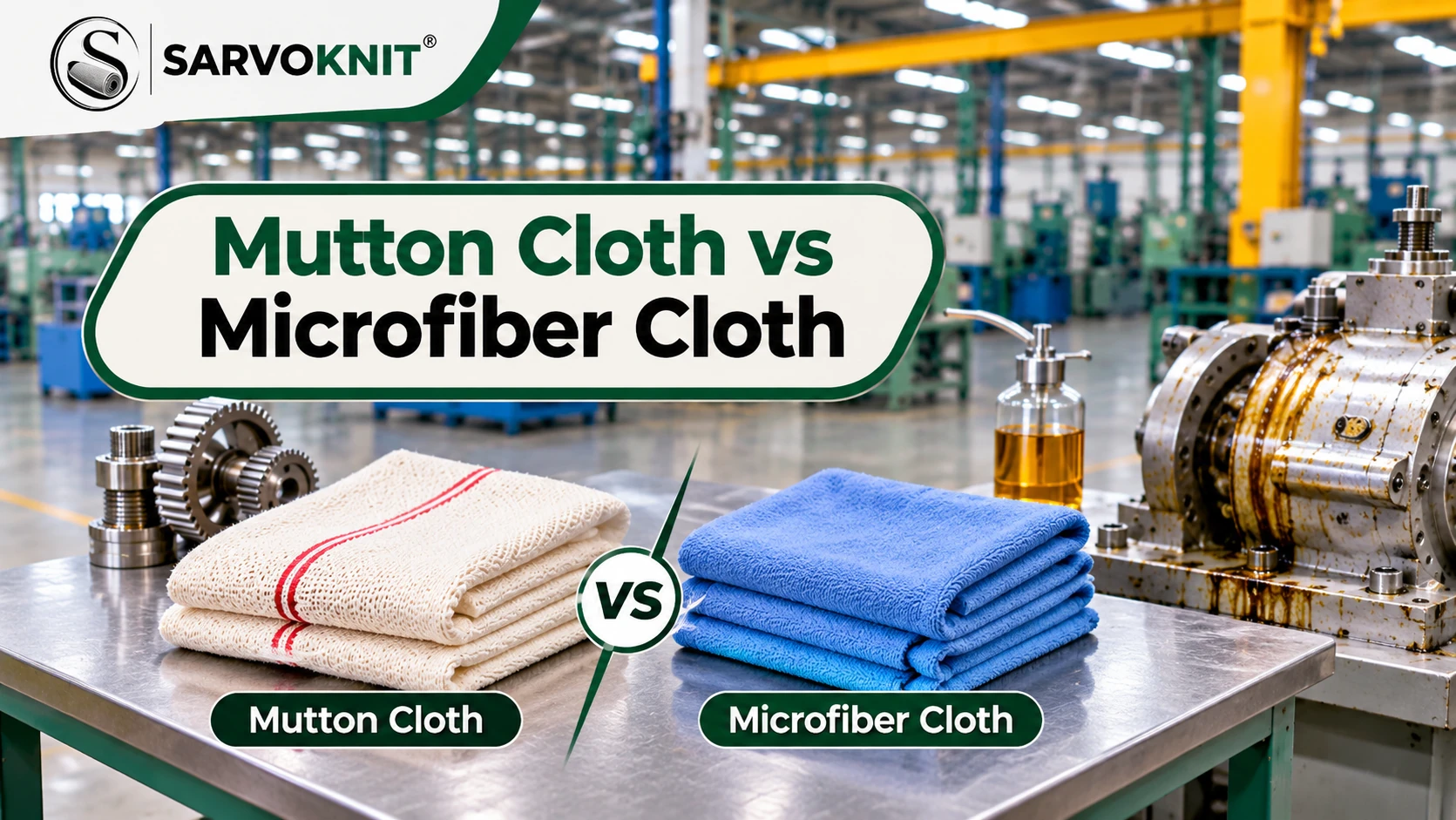
Cotton mutton cloth, industrial cotton rags, microfiber, and specialised wiping materials can all be useful, depending on the cleaning task.
The following comparison explains their typical applications.
|
Cloth type |
Main advantage |
Best application |
Limitation |
|---|---|---|---|
|
Cotton mutton cloth |
Absorbent, flexible knitted construction |
Routine oil wiping, tools and machinery |
May release fibres; unsuitable for strict lint-free requirements |
|
Cotton cleaning rags |
Accessible and economical |
General workshop wiping and rough cleaning |
Quality and cleanliness can vary |
|
Microfiber cloth |
Captures fine particles and surface residue |
Light oil films and delicate surface cleaning |
Performance depends on fibre and chemical compatibility |
|
Industrial disposable wipes |
Consistent single-use cleaning |
Controlled maintenance and contamination-sensitive tasks |
Recurring consumable cost |
|
Specialised oil absorbents |
Designed to contain larger quantities of oil |
Leaks, spills and oil recovery |
May not be suitable for detailed component wiping |
No single material is the best choice for every situation. Buyers should match the cloth to the oil type, amount of contamination, surface sensitivity, and cleaning process.
For a broader explanation of material selection, read our guide on choosing the right industrial cleaning cloth.
Is Cotton Mutton Cloth Good for Cleaning Oil and Grease from Machinery?
Yes, cotton mutton cloth is suitable for many routine industrial oil-wiping and machinery maintenance tasks because of its absorbent cotton fibres and flexible knitted structure.
Mutton cloth is manufactured from cotton yarn using a knitted construction. Its soft texture allows the material to follow curved surfaces, equipment housings, and accessible machine components.
Several properties make it useful in industrial workplaces.
Absorbency: Cotton fibres can absorb liquid residues, making the cloth practical for removing light oil contamination.
Flexibility: Knitted construction allows the cloth to adapt to irregular shapes and machinery surfaces.
Soft handling: Clean, appropriately selected cotton fabric is suitable for many general wiping applications.
Practical supply formats: Mutton cloth can be supplied in rolls and cut according to workshop requirements.
However, knitted cotton is not completely lint-free. Where loose fibres could affect precision components, bearings, electronics, or critical systems, users should select an approved low-lint or lint-free material.
For more information about its construction and applications, explore what mutton cloth is and how it is used.
How Can You Safely Remove Oil and Grease from Industrial Machinery?
Effective machinery cleaning begins with controlling equipment hazards, removing excess contamination, and selecting the right cloth and cleaning product for the surface.
The following process is suitable as general guidance for planned maintenance, subject to the equipment manufacturer's instructions and site safety procedures.
1. How Should Machinery Be Prepared Before Cleaning?
Before maintenance cleaning, follow the facility's safety procedures. Shut down and isolate equipment where required, control stored energy, and apply the appropriate lockout/tagout procedure.
Do not place cloths near moving parts, exposed electrical components, or hot surfaces. Wear the protective equipment required for the task.
2. How Should Excess Oil Be Removed?
For small amounts of accessible surface oil, use an absorbent wiping cloth to collect the residue.
Where a significant oil leak or spill is present, use suitable spill-control materials and address the source of the leak. Ordinary cotton wiping cloth should not replace dedicated spill-response equipment.
3. How Can Thick Grease Be Cleaned?
Heavy grease is often more difficult to remove than liquid oil.
Where the equipment manufacturer permits it, use an appropriate degreasing product to loosen the contamination. Check the chemical's compatibility with the equipment, cloth, seals, coatings, and surrounding components.
Then remove the loosened residue with a suitable wiping material.
4. How Should the Surface Be Finished After Cleaning?
Use a fresh, clean cloth to remove remaining residue where required.
Inspect the surface for visible oil, grease, loose fibres, or cleaning-product deposits. Precision components may require a more controlled final-wiping process.
5. How Should Used Oily Cloths Be Handled?
Place oil-contaminated wiping materials in designated containers and follow workplace procedures for laundering or disposal.
Some oil-soaked fabrics can present fire hazards, especially when contaminated with particular oils or chemicals. Never leave contaminated cloths piled near heat sources or electrical equipment.
What Should Industrial Buyers Look for in an Oil Cleaning Cloth?
Industrial buyers should assess oil-handling performance, fabric consistency, lint generation, durability, and suitability for the intended cleaning process.
Important considerations include:
-
Absorbency: Does the fabric effectively collect the specific oil or lubricant used in the facility?
-
Fabric weight: Is the cloth suitable for light wiping or more demanding maintenance tasks?
-
Lint generation: Will loose fibres create problems for the equipment?
-
Wet strength: Does the material remain usable when exposed to oils and approved cleaning products?
-
Size and packaging: Can workers obtain conveniently sized pieces without unnecessary waste?
-
Consistency: Will repeat orders have comparable yarn, construction, and fabric specifications?
For knitted cotton materials, yarn selection, GSM (grams per square metre), and knit construction influence handling and performance.
Our detailed article on premium mutton cloth, yarn, GSM and knit quality explains these specifications.
Industrial procurement teams should request samples and test them with their actual equipment, lubricants, and maintenance procedures before placing large orders.
Which Industries Use Cotton Cloth for Cleaning Oily Machinery?
Cotton wiping cloth is used in automotive, manufacturing, engineering, marine, and general industrial maintenance where routine oil and grease removal is necessary.
Common applications include:
-
Automotive workshops: Wiping lubricant residue from tools, engine components, and accessible workshop equipment.
-
Engineering facilities: Cleaning machining equipment, workbenches, and metal components during maintenance.
-
Manufacturing plants: Removing routine oil deposits from accessible machinery surfaces and production tools.
-
Marine maintenance: General wiping of oily equipment and workshop surfaces, subject to operating procedures.
-
Industrial maintenance departments: Cleaning tools and equipment during scheduled servicing.
The correct wiping material may differ across these applications. Areas with strict cleanliness or contamination-control requirements should use materials approved for those operations.
Why Should Businesses Consider Sarvoknit for Industrial Cotton Wiping Cloth?
Sarvoknit manufactures knitted cotton mutton cloth and stockinette for industrial and commercial applications, including machinery cleaning, wiping, polishing, and maintenance.
Based in Mohali, Punjab, India, Sarvoknit focuses on cotton yarn selection, precision knitting, and consistent manufacturing quality.
Its industrial mutton cloth is available with custom manufacturing options, including fabric weights, widths, roll lengths, and packaging according to buyer requirements.
For businesses seeking a regular supply of cotton wiping cloth in bulk, these options can help align the product specification with the intended application.
Sarvoknit also manufactures cotton stockinette for industrial cleaning, polishing, wrapping, and protective applications.
Businesses can request specifications and discuss their requirements before choosing a suitable grade.
Which Cleaning Cloth Should You Choose for Your Industrial Machinery?
For routine wiping of oil and grease from industrial machinery, absorbent cotton mutton cloth is a practical option. For sensitive components, strict contamination controls, or larger oil spills, a specialised wiping or absorbent material may be more suitable.
The best choice depends on the application, not simply the cloth's price or thickness.
Industrial buyers should evaluate absorbency, fibre shedding, material compatibility, and consistency before selecting a product for regular use.
Looking for industrial cotton wiping cloth in bulk? Contact Sarvoknit to discuss your machinery-cleaning application, request product specifications, and get a quotation for mutton cloth or stockinette.