Sarvoknit Insights
Mutton Cloth vs Microfiber: Which Works Best for Industrial Cleaning?
Discover the key differences between mutton cloth and microfiber for industrial cleaning. Compare absorbency, lint, polishing performance and costs to choose the right fabric for your business.
On this page
- 01 What Is the Main Difference Between Mutton Cloth and Microfiber Cloth?
- 02 Mutton Cloth vs Microfiber Cloth: Which Material Performs Better?
- 03 Which Cloth Is Better for Cleaning Oil and Grease from Machinery?
- 04 Is Mutton Cloth or Microfiber Better for Dust Removal?
- 05 Which Cloth Is Better for Car Polishing and Automotive Cleaning?
- 06 Does Mutton Cloth Leave Lint Compared with Microfiber?
- 07 Is Mutton Cloth More Cost-Effective Than Microfiber?
- 08 When Should Industrial Buyers Choose Mutton Cloth?
- 09 Where Can Businesses Source Quality Mutton Cloth in Bulk?
- 10 Conclusion: Which Cloth Should You Choose?
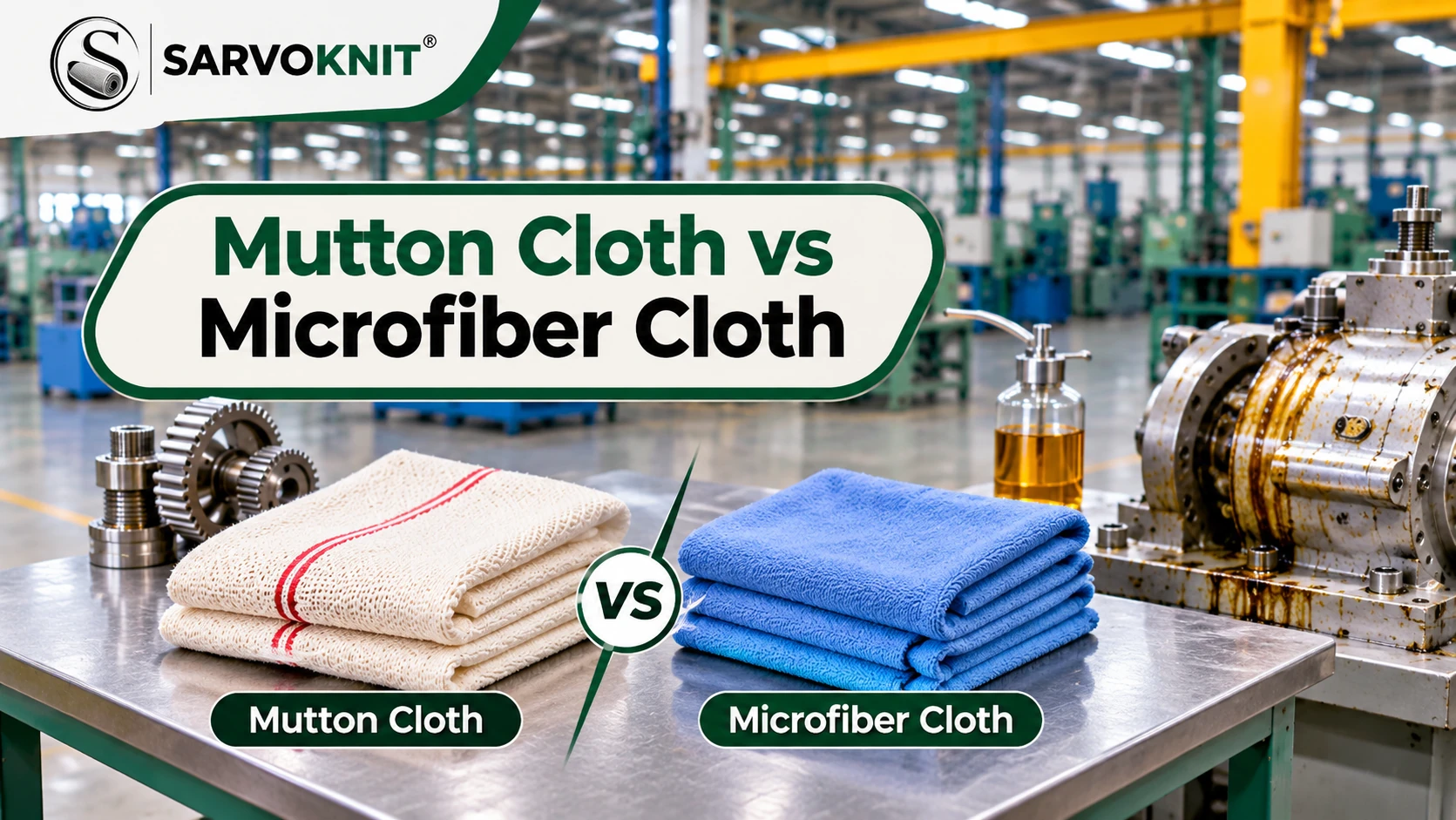
Mutton cloth or microfiber cloth—which is better for industrial cleaning? Mutton cloth is generally suitable for routine machinery wiping, liquid residue removal and industrial maintenance, while microfiber is often preferred for capturing fine dust and cleaning delicate surfaces. Mutton cloth is made from knitted cotton yarn, whereas microfiber typically consists of fine synthetic fibres. The better choice depends on the cleaning application, surface sensitivity, lint requirements and fabric specifications.
What Is the Main Difference Between Mutton Cloth and Microfiber Cloth?
The main difference is their fibre composition and cleaning behaviour.
Mutton cloth is generally manufactured from cotton yarn using a flexible knitted construction. It is commonly supplied in rolls for industrial wiping, polishing and maintenance applications.
For a detailed explanation of its properties and applications, explore our guide on what mutton cloth is and how industries use it.
Microfiber cloth is typically manufactured from polyester and polyamide fibres. Its fine filament structure helps capture small particles, making it useful for precision wiping and surface finishing.
Both materials can perform effectively, but neither is suitable for every industrial cleaning requirement.
Mutton Cloth vs Microfiber Cloth: Which Material Performs Better?
The following comparison highlights important differences for industrial buyers.
|
Feature |
Mutton Cloth |
Microfiber Cloth |
|---|---|---|
|
Material |
Knitted cotton fabric |
Fine synthetic fibres |
|
Absorbency |
Suitable for absorbing liquids and wiping residues |
Effective moisture pickup, depending on construction |
|
Dust removal |
Suitable for general dust and dirt |
Often better for fine dust capture |
|
Lint generation |
Depends on yarn and knit quality |
Usually low-lint when properly manufactured |
|
Flexibility |
Soft, stretchable knitted structure |
Flexible, depending on fabric construction |
|
Polishing |
General polishing and wiping |
Fine polishing and streak-free finishing |
|
Chemical compatibility |
Depends on cotton quality and cleaning chemicals |
Some chemicals can damage synthetic fibres |
|
Bulk supply |
Commonly available in continuous rolls |
Commonly available as finished cloths |
|
Typical applications |
Machinery wiping, maintenance, general cleaning |
Glass, delicate surfaces, fine dust removal |
Quick takeaway: Choose mutton cloth for suitable general industrial wiping applications and microfiber for tasks where fine particle capture or a low-lint finish is especially important.
Which Cloth Is Better for Cleaning Oil and Grease from Machinery?
Cotton mutton cloth can be a practical option for removing oil, grease and general residues from machinery during routine maintenance.
Its knitted construction provides flexibility when wiping tools, equipment housings and uneven surfaces.
Microfiber can also remove oily residues, but performance depends on its construction, the cleaning solution and the amount of contamination.
For heavy-duty industrial wiping, buyers should evaluate:
-
Liquid absorption and retention
-
Fabric strength during wiping
-
Lint generation
-
Compatibility with oils and cleaning chemicals
-
Cost per cleaning task
Best choice: Mutton cloth is worth considering for routine machinery wiping, while microfiber may be preferable for finer finishing work. Always test samples with the actual residue.
Is Mutton Cloth or Microfiber Better for Dust Removal?
Microfiber is generally more effective for capturing fine dust from smooth surfaces because its extremely fine fibres can trap small particles during wiping.
Mutton cloth is suitable for removing visible dust, dirt and general contamination from equipment and workstations.
However, where particle control is critical, such as sensitive electronics or cleanroom environments, neither material should be selected without checking its cleanliness specifications.
Short answer: Microfiber is usually better for fine dust removal, while mutton cloth is useful for everyday industrial wiping.
Which Cloth Is Better for Car Polishing and Automotive Cleaning?
Microfiber is commonly preferred for final automotive polishing, especially on painted surfaces, glass and glossy finishes where reducing visible lint and fine scratches is important.
Soft cotton mutton cloth may be suitable for selected automotive workshop tasks, including general wiping, applying certain products and cleaning equipment components.
Before using either fabric on delicate paintwork, check for trapped particles, rough edges and suitability for the surface.
Best choice: Use an appropriate automotive-grade microfiber cloth for final paint finishing. Consider suitable mutton cloth for general workshop cleaning and maintenance.
Does Mutton Cloth Leave Lint Compared with Microfiber?
Mutton cloth can release lint depending on yarn quality, knitting construction, finishing and washing conditions.
Microfiber is often designed for low-lint cleaning, but it should not automatically be considered completely lint-free.
For industrial applications, buyers should ask suppliers about lint performance and test the finished material on their intended surfaces.
Important: Low-lint and lint-free are not interchangeable claims. Critical cleaning applications may require independently tested specialist wipes.
Is Mutton Cloth More Cost-Effective Than Microfiber?
Mutton cloth can be economical for bulk industrial wiping, particularly when purchased in rolls and cut according to operational requirements.
Microfiber may have a higher initial purchase cost, but its cleaning performance and repeated-use potential can make it economical for certain applications.
Instead of comparing only purchase prices, businesses should calculate:
Cost per use = Total cloth purchase and maintenance cost ÷ Number of effective uses
Consider laundering, replacement frequency, cleaning time and material waste before deciding which fabric offers better value.
When Should Industrial Buyers Choose Mutton Cloth?
Mutton cloth is worth considering when businesses require flexible cotton fabric for general industrial wiping, machinery maintenance or other compatible applications.
It may be especially relevant when buyers need continuous rolls, customised dimensions or consistent bulk supply.
Microfiber is generally more appropriate when fine dust capture, low-lint surface cleaning or streak-free finishing is the main requirement.
For a broader material-selection guide, read How to Choose the Right Industrial Cleaning Cloth for Your Business.
Where Can Businesses Source Quality Mutton Cloth in Bulk?
Sarvoknit is a manufacturer of premium mutton cloth and stockinette based in Mohali, Punjab, India. The company supplies knitted fabric for industrial and commercial applications, with options to discuss customised product specifications and bulk requirements. Businesses seeking cotton mutton cloth for cleaning, wiping or maintenance can contact Sarvoknit to discuss their application, required quantity and suitable fabric specifications.
Conclusion: Which Cloth Should You Choose?
Mutton cloth and microfiber serve different industrial cleaning needs. Mutton cloth offers a flexible cotton-based option for general wiping and maintenance, while microfiber is often preferred for fine dust removal and precision finishing.
For industrial buyers, the best decision comes from testing fabric samples against actual cleaning requirements rather than selecting a material by name alone.
Looking for mutton cloth in bulk? Contact Sarvoknit to discuss your requirements and request a quote.