Sarvoknit Insights
How to Choose the Right Industrial Cleaning Cloth for Your Business
Choose an industrial cleaning cloth by the job, not the price. For oil, grease, and general machine wiping, absorbent knitted cotton such as mutton cloth gives the best balance of absorbency, softness, and durability. Use microfibre for dust and glass, non-woven wipes for cleanrooms, and recycled rags only for rough, low-risk jobs. Compare cost per job, not cost per kg.
On this page
- 01 What is an industrial cleaning cloth?
- 02 Why your choice of cleaning cloth matters
- 03 The 5 main types of industrial cleaning cloth
- 04 7 factors to consider before you buy
- 05 Product consistency: the factor most buyers forget
- 06 Matching cloth to your industry
- 07 Common mistakes when buying cleaning cloth
- 08 Questions to ask your cleaning cloth supplier
- 09 Find the right cleaning cloth with Sarvoknit
Your cleaning cloth budget looks small on paper. Then you count the hidden costs: rags that leave lint on finished parts, cloths that fall apart after one wipe, and workers using three pieces to do one job.
The wrong industrial cleaning cloth quietly drains time, money, and product quality. The right one does the job in fewer wipes and lasts longer.
This guide compares the main cloth types, explains the seven factors that matter, and shows you how to match the right cloth to your work.
What is an industrial cleaning cloth?
An industrial cleaning cloth is a wiping material made for workplaces such as factories, workshops, hangars, print shops, and ships. It’s used to remove oil, grease, coolant, ink, dust, and spills from machines, tools, parts, and surfaces.
Unlike household cloths, industrial cloths are judged on performance at volume. They need to absorb fast, hold together under hard use, and stay consistent across thousands of wipes.
Why your choice of cleaning cloth matters
Most buyers treat cleaning cloth as a basic consumable and pick the cheapest option. That usually backfires in three ways:
- Rework: lint or scratches on finished surfaces mean the job is done twice.
- Higher usage: weak, poorly absorbent cloth gets used up faster, so you buy more.
- Lost time: workers spend longer cleaning when the cloth pushes oil around instead of lifting it.
The cheapest cloth per kg is rarely the cheapest cloth per job.
The 5 main types of industrial cleaning cloth
| Cloth type | Made from | Strengths | Limits | Best for |
|---|---|---|---|---|
| Recycled rags | Used garments and textile waste | Cheapest per kg | Mixed fabrics, buttons and seams, high lint | Floor spills, rough grease jobs |
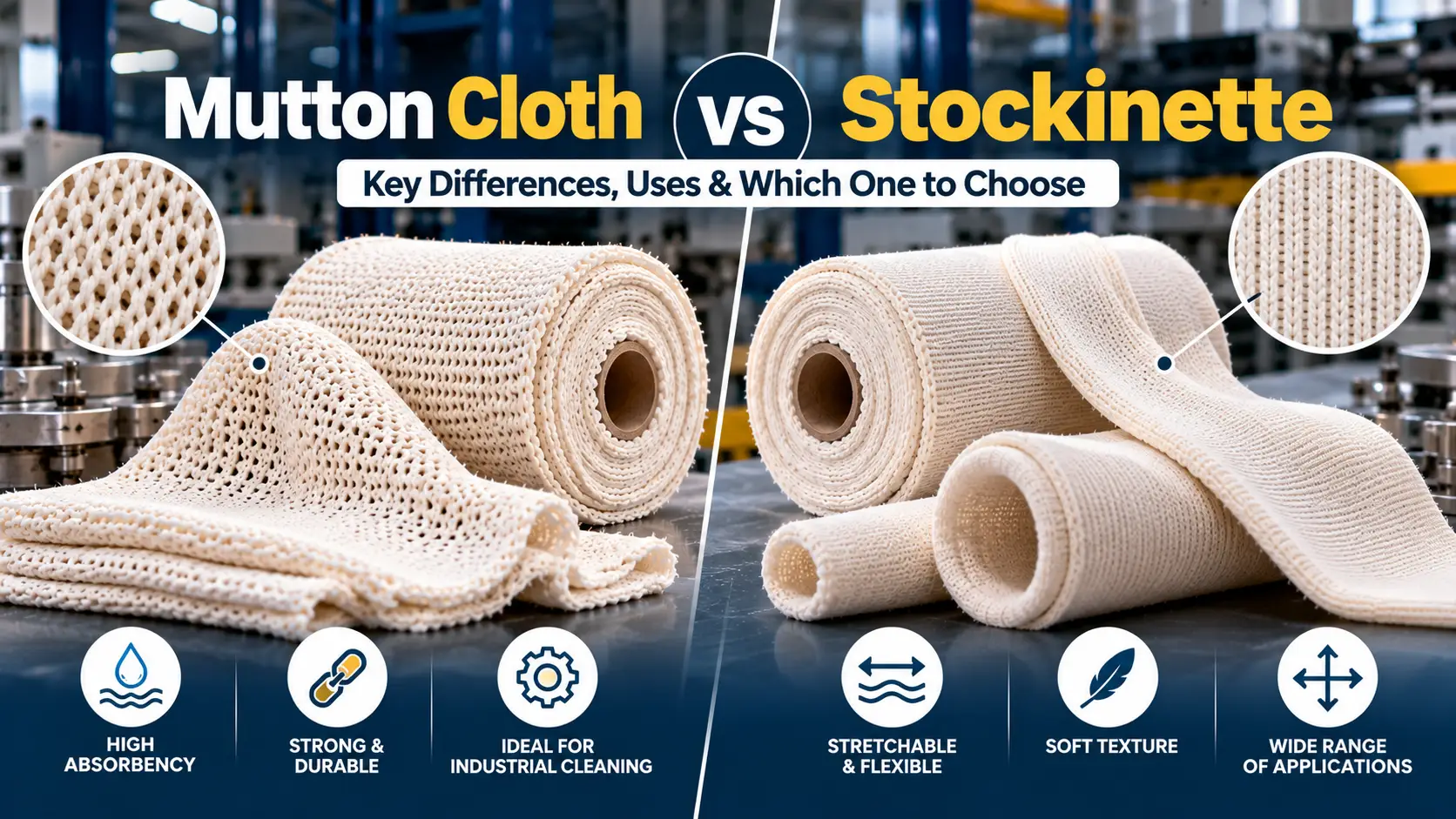
| Mutton cloth/stockinette | New knitted cotton | Absorbent, soft, low-fraying, consistent | Costs more than rags per kg | Machine wiping, polishing, workshops |
| Terry towels | Looped cotton | Holds a lot of liquid | Loops snag and shed | Drying, washdown areas |
| Microfibre | Fine synthetic fibres | Traps dust, great on glass | Weaker on heavy oil, can be damaged by high heat and some solvents | Dust, screens, light cleaning |
| Non-woven wipes | Bonded fibres | Consistent, convenient, often low-lint | Usually single-use, so cost and waste add up | Cleanrooms, single-use hygiene tasks |
Recycled cotton rags
Rags are made from used clothing and textile waste. They’re cheap and easy to find. The trade-off is inconsistency: one bale can mix fabrics, sizes, and quality, and leftover buttons, zips, and seams can scratch surfaces.
Mutton cloth
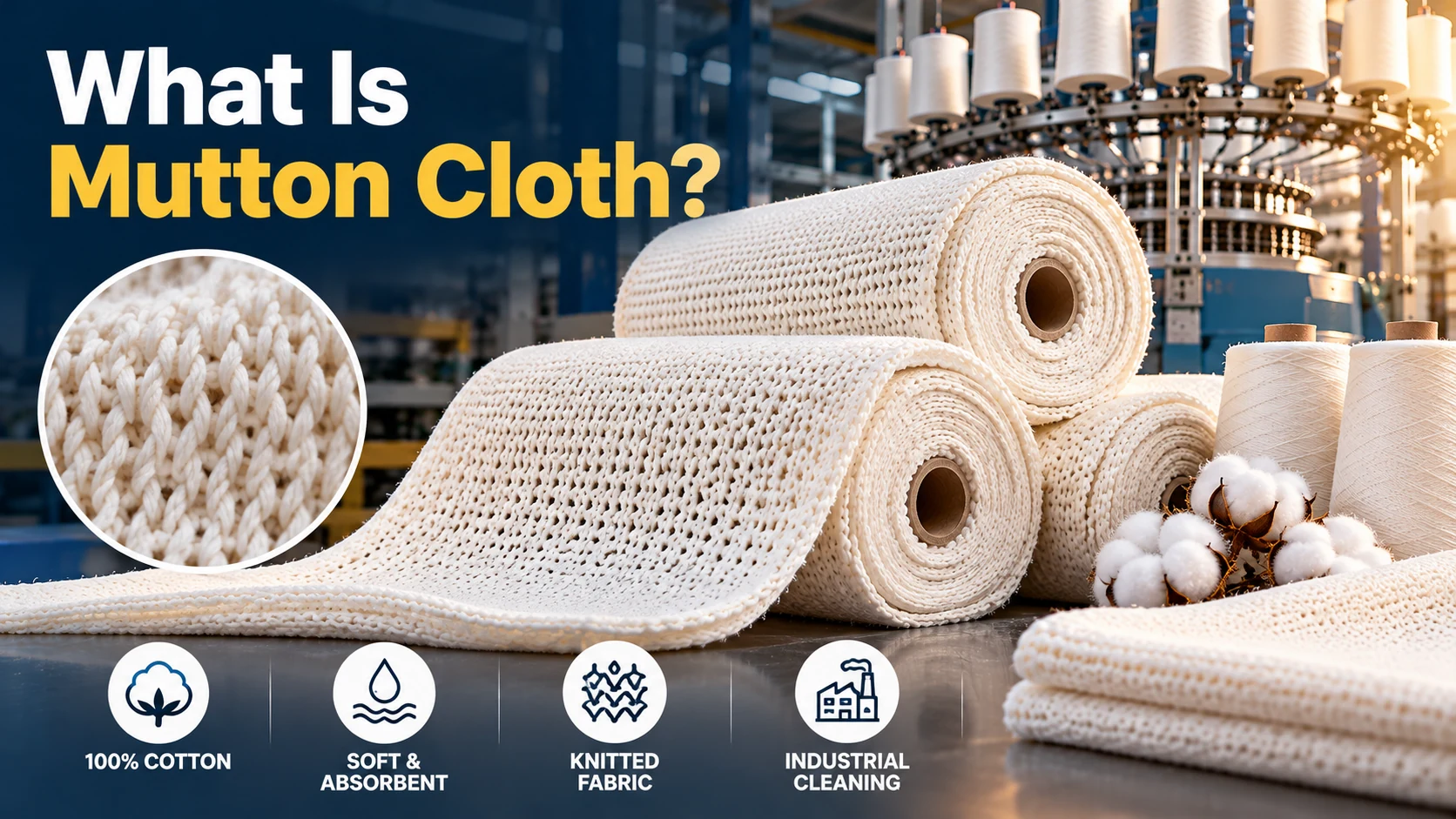
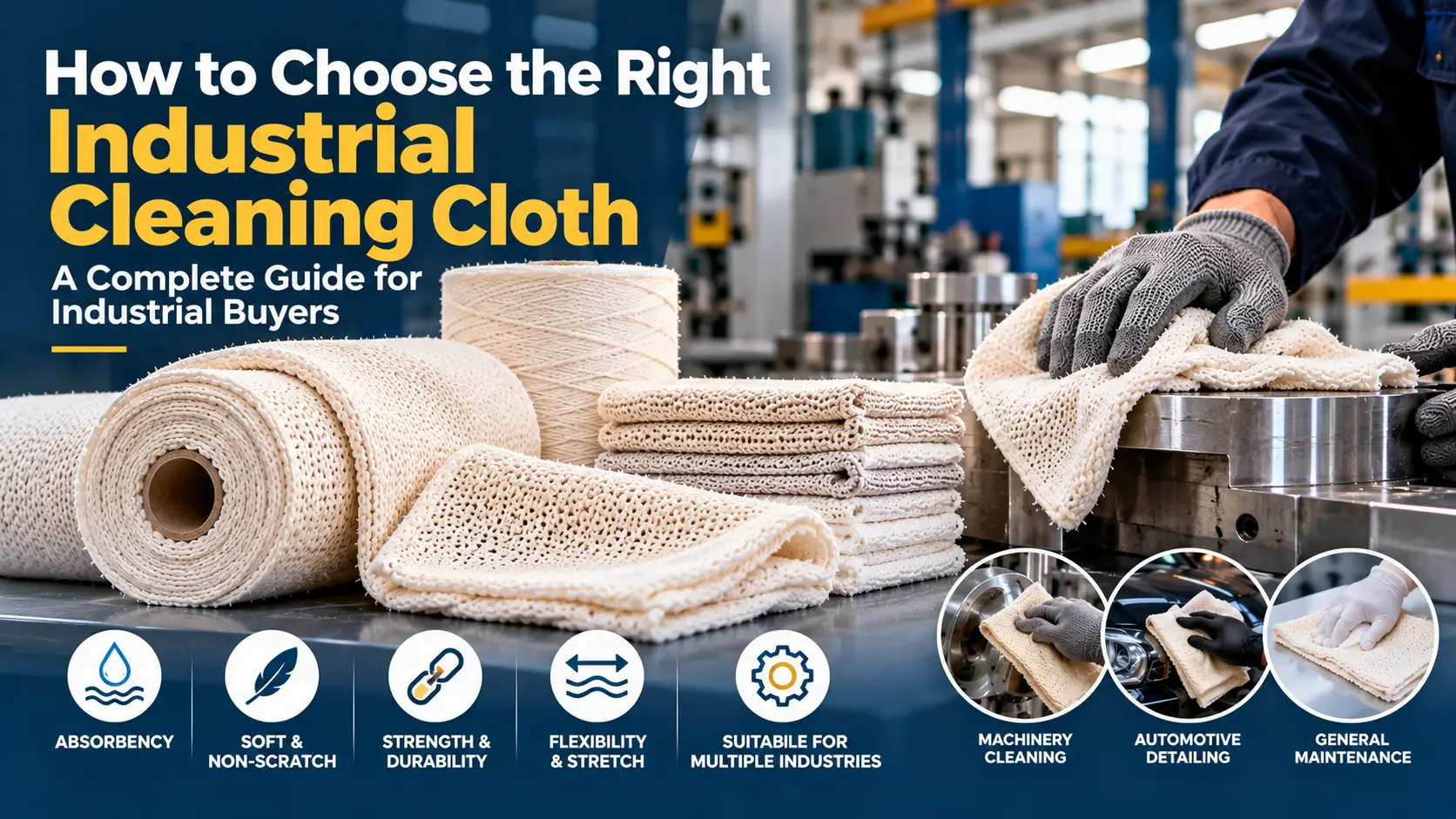
Mutton cloth is a knitted cotton fabric made as a seamless tube. Because it’s made from new yarn, quality stays consistent from roll to roll. It’s highly absorbent, gentle on surfaces, and resists fraying. Its stretch lets it wrap around a hand, pad, or awkward part. Learn more about what mutton cloth is and where it’s used.
Terry towels
Terry cloth has raised loops that hold a lot of liquid, which makes it good for drying and large spills. The loops can catch on sharp edges and shed fibres, so it’s less suited to finishing work.
Microfibre
Microfibre uses very fine synthetic fibres that trap dust and fine particles. It works well on glass and screens, but it’s less effective on heavy oil and grease and costs more per piece.
Non-woven wipes
Non-woven wipes are made by bonding fibres rather than knitting or weaving them. They’re consistent and convenient, but most are single-use, so costs and waste grow quickly in high-volume work.
7 factors to consider before you buy
1. What you’re cleaning
Start with the job. Heavy oil and grease need highly absorbent cotton. Fine dust on glass suits microfibre. Painted, polished, or coated surfaces need something soft with low lint.
2. Absorbency
Cotton absorbs water, oil, and many solvents well, and synthetic fibres absorb less. If your team mainly deals with liquids, knitted cotton usually does more work per wipe.
3. Lint level
Lint matters wherever there’s a finished surface: painting, coating, printing or assembly. In aviation and defence maintenance, loose fibres also count as foreign object debris. Always test a sample on a dark, smooth surface before ordering in bulk.
4. Durability and reuse
Some jobs need a cloth that survives scrubbing, twisting and washing. Knitted cotton resists fraying and lasts longer than loose recycled pieces or thin disposables. Many cotton cloths can be laundered and reused, depending on what they were used to clean.
5. Surface safety
Seams, buttons, and coarse fibres can scratch sensitive parts. For polishing and finishing, choose a seamless, soft cloth.
6. Chemical compatibility
Check how the cloth reacts with your cleaners and solvents. Some synthetics weaken or melt with certain chemicals or high heat. Cotton is generally more tolerant, but always test it with your own products.
7. Cost per use
Look beyond price per kg. Ask how many wipes each cloth delivers, and whether it can be reused. A slightly pricier cloth that lasts longer often costs less over a month.
Product consistency: the factor most buyers forget
If you buy cleaning cloth every month, consistency matters as much as quality. Every roll should match the last in:
- Fabric construction
- Absorbency
- Weight (GSM)
- Finish
- Performance on the job
Consistency comes from controlled manufacturing: the same yarn, the same machine settings, and the same inspection on every batch.
Matching cloth to your industry
| Industry | Main cleaning need | Recommended cloth |
|---|---|---|
| Automotive workshops | Polishing, wax removal, panel prep | Mutton cloth |
| Engineering and manufacturing | Oil, grease, machine wiping | Mutton cloth |
| Printing | Roller and press cleaning, ink removal | Low-lint mutton cloth |
| Marine and ship supply | Engine-room and deck maintenance | Mutton cloth |
| Defence and aviation | Precision cleaning, protective handling | Bleached mutton cloth |
| Woodworking and furniture | Wiping sawdust, applying stain and polish | Fine mutton cloth |
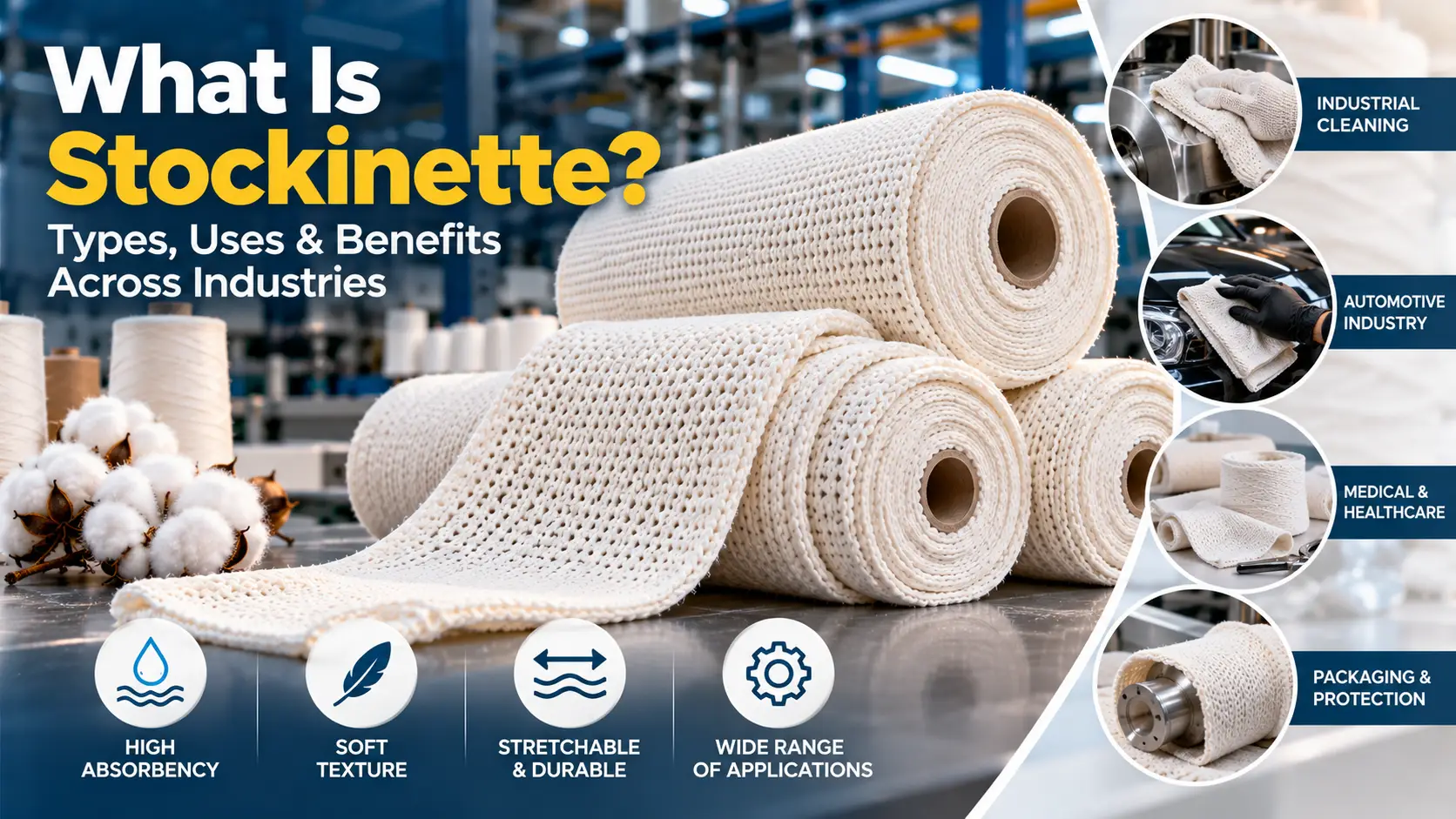
| Packaging and protection | Sleeving and protecting finished parts | Tubular stockinette |
| Cleanrooms | Contamination control | Specialist non-woven wipes |
| General floor spills | Bulk liquid pickup | Recycled rags or terry towels |
For protecting shafts, pipes, and finished parts, seamless stockinette sleeves slide over the part and keep it free of scuffs and dust.
Common mistakes when buying cleaning cloth
Buying on price alone
The lowest quote often hides poor absorbency and a short life. Compare cost per job, not cost per kg.
Skipping the sample test
A photo or spec sheet won’t show lint or tear strength. Test a sample in your own workplace first. Our guide gives five simple tests for yarn, GSM and knit quality.
Ignoring batch consistency
A good first order means little if the next one is different. Ask how the supplier controls quality between production runs.
Using one cloth for everything
The cloth that suits floor spills won’t suit polishing. Many businesses do better with two grades: one for heavy cleaning and one for finishing.
Storing oily cloths carelessly
Cloths soaked in oil, especially drying oils such as linseed oil used in wood finishing, can heat up on their own and catch fire. Keep used oily cloths in a closed metal container and follow your site’s safety rules for disposal or laundering.
Questions to ask your cleaning cloth supplier
- Do you manufacture the cloth yourselves, or source it from others?
- Is the cloth made from new yarn or recycled material?
- Which weights, widths, and finishes do you offer?
- Do you supply rolls, cut pieces, or custom packing?
- What is your minimum order quantity?
- Can you send samples from different batches?
- Which industries do you regularly supply?
A manufacturer who answers these clearly gives you far more control over quality and supply.
Find the right cleaning cloth with Sarvoknit
Sarvoknit is an industrial mutton cloth manufacturer based in Mohali, India. We knit cotton mutton cloth rolls in-house from selected yarn, in natural and bleached finishes and in the width, weight and packing your work needs. We’re ISO and ZED certified, and we supply leading Indian aerospace, defence and PSU organisations.
Tell us what you clean and how often, and request a sample of the grade that fits.